What “fit for Midland” means
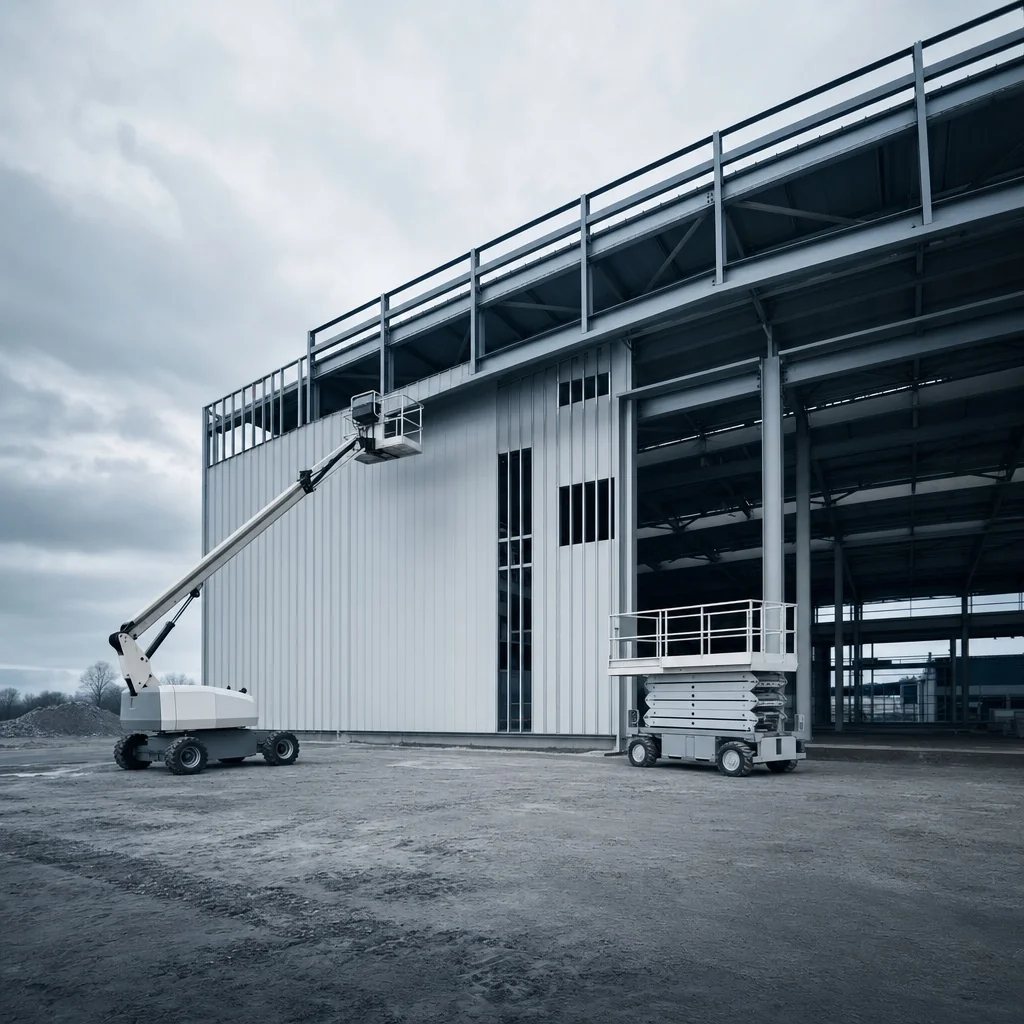
Midland projects often split between interior service work in commercial spaces and rugged exterior tasks at industrial sites. That contrast drives two different paths: slab-ready electric scissor lifts for finished floors, and rough-terrain platforms for sandy or caliche-heavy lots where traction and ground clearance matter.
Key points that shift selections locally: - High winds complicate outdoor platform stability and can restrict certain lift classes. - Prolonged heat affects duty cycles and can change where machines are staged between tasks. - Uneven, rutted approaches push many exterior jobs toward rough-terrain lifts.
How we frame the comparison
Start with geometry: can the machine sit below the task or must it reach over an obstruction? Straight-up access in tight aisles points to vertical masts or compact electric scissors. Overhead obstacles or set-backs suggest articulated or telescopic booms. When a work zone spans ground-level material handling and elevated placement, a telehandler may complement or replace a platform for certain phases.
- Interior access: look at floor load sensitivity, aisle width, and door clearances. See /electric-scissor-lift-rental/ and /vertical-mast-lift-rental/.
- Exterior access on unimproved ground: prioritize traction and gradeability. See /rough-terrain-scissor-lift-rental/ and /boom-lift-rental/.
- Long horizontal reach: compare /articulating-boom-lift-rental/ versus /telescopic-boom-lift-rental/ based on obstacles and required outreach.
Built for Permian workloads
Energy support facilities, hangar maintenance, and large outdoor staging yards define much of the area’s aerial demand. That mix favors durable platforms, higher ground clearance, and clear planning for wind holds. For logistics and material prep that feed lift work, /forklift-rental/ and /telehandler-rental/ can round out the plan. Site services such as /generators-light-towers-rental/, /storage-containers-rental/, and /temporary-fencing-barricades-rental/ help stabilize schedules when crews and equipment stay on site for extended runs.
How to use this site
Each category page lists the constraints that usually decide between models and classes. When measurements or conditions conflict, plan around the strictest factor, then confirm details with the chosen unit’s documentation and your site procedures.
For questions or to discuss local conditions, reach out at /contact/.