Start with load, run time, and placement
The right generator begins with two questions: what must run at the same time, and where the unit can sit without blocking equipment routes. In Midland, outdoor tasks around industrial sites often place power sources off the slab and onto compacted, sandy ground. That affects trailer access and whether a skid or towable frame is practical. Long runs to remote pumps or temp offices add cable losses and require larger capacity to account for distance and voltage drop.
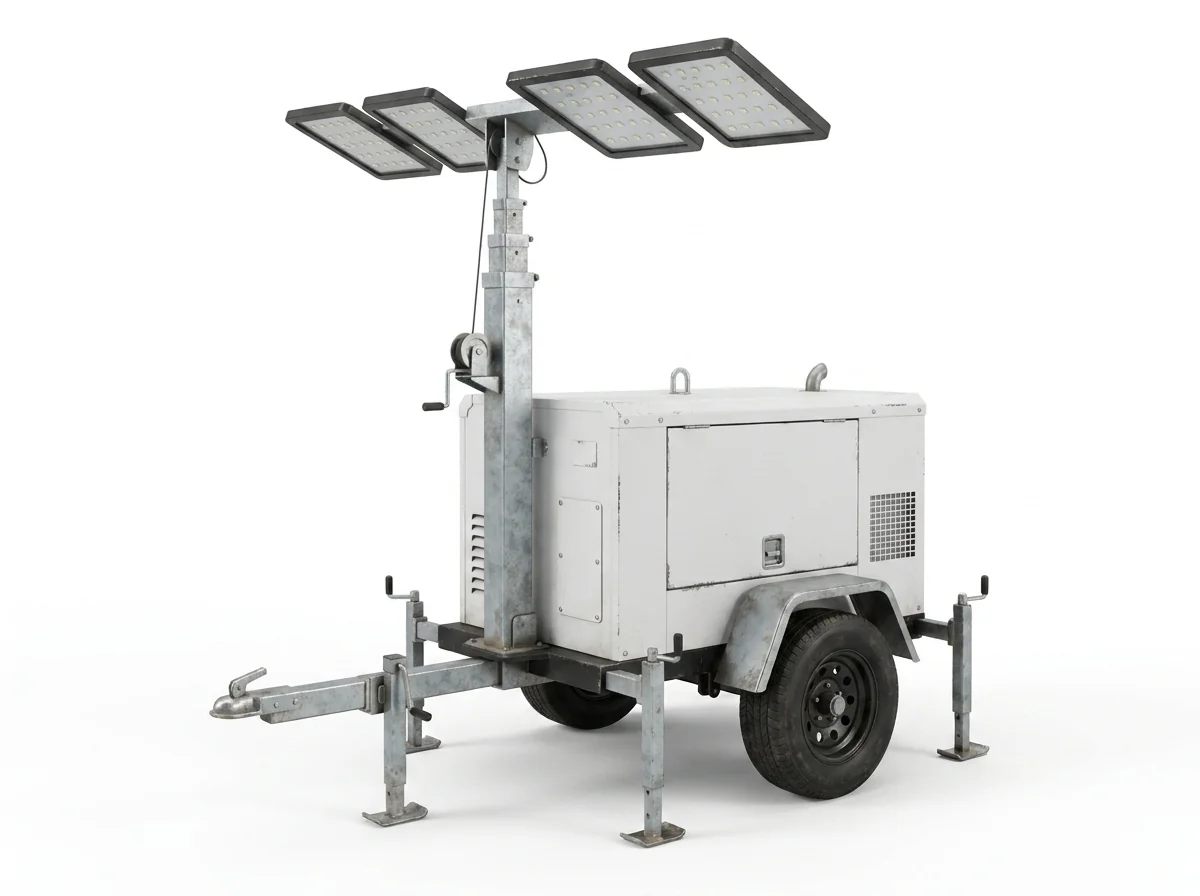
Light towers hinge on mast height, light pattern, and the ability to park on uneven soil without drifting. Open yards with wind exposure around staging areas can push a light mast near its stability limits. Actual conditions, equipment instructions, and site procedures govern final setup decisions.
Heat, wind, and dust change expectations
Summer heat challenges engine cooling and alternator performance. Dust from caliche-heavy surfaces can load filters quickly and affect run consistency. Frequent gusts mean mast orientation and parking angle matter when comparing light towers with different stabilizer footprints. Where aircraft or tall-door hangars are nearby, glare and beam direction can also factor into placement.
Access route and service clearance
- Measure gate width and turning radius for towable units.
- Note trailer tongue height against yard grades and ruts.
- Confirm a level pad large enough for outriggers and safe fueling space.
On tight lots serving aerial equipment, leave clearance for lifts to pass. If night work supports elevated tasks, coordinate tower locations with the working envelope of scissor lifts or booms. See options at /electric-scissor-lift-rental/, /rough-terrain-scissor-lift-rental/, and /boom-lift-rental/.
Typical Midland use cases
- Night maintenance at industrial sites where grid power is intermittent or too distant.
- Temporary office compounds needing quiet, steady power and area lighting.
- Hangar and infrastructure projects where lighting must avoid spill into active aprons.
What to confirm before calling
- Total running and starting load, plus longest cable run length.
- Expected run hours per shift and refuel windows.
- Ground conditions at the parking spot and wind exposure.
- Any light spill restrictions near sensitive work zones or neighboring properties.
For a broader comparison of site gear that supports elevated work, visit /products/.