Ground and footing choice
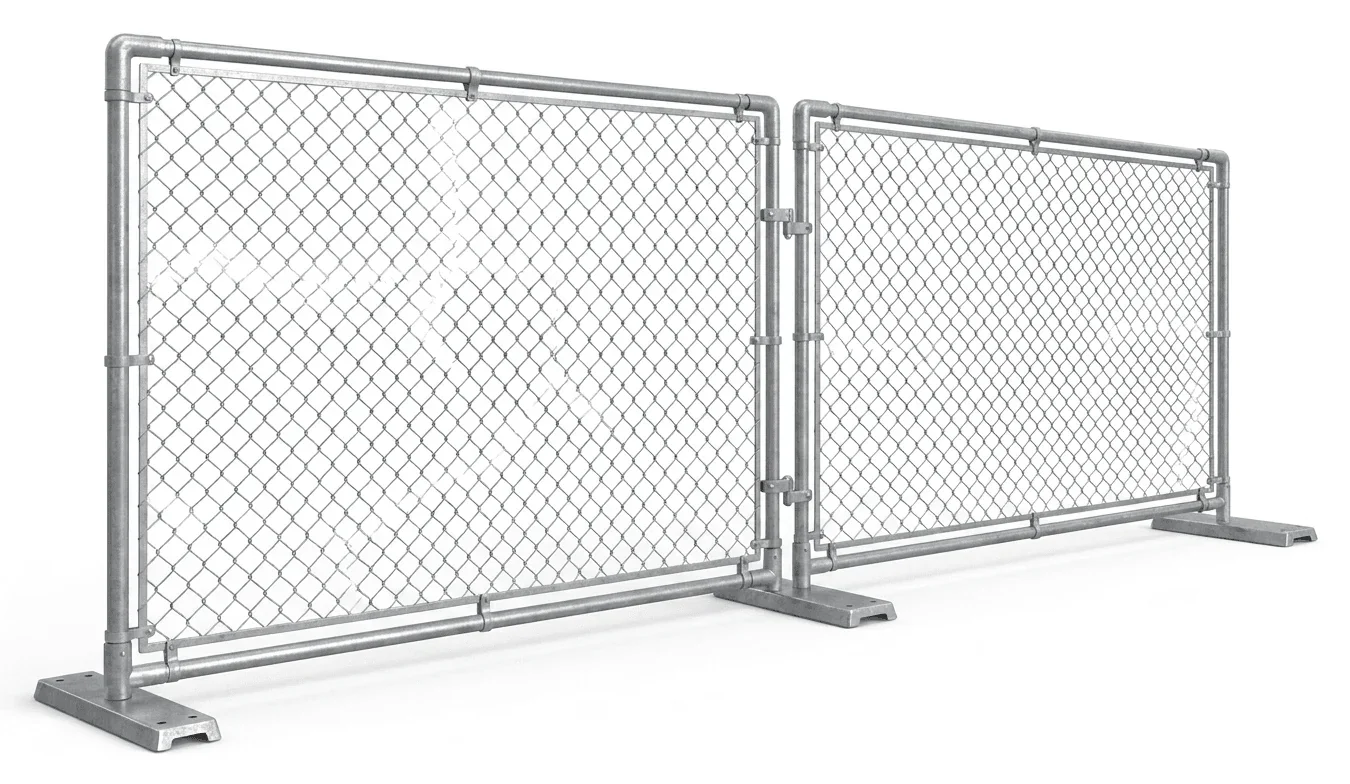
Surface dictates stability. Driven posts can hold well in compacted soils but may be limited by buried utilities. Freestanding panels place weight above grade and are faster to reposition around changing work faces. Where heavy equipment turns, wider bases and shorter panel runs reduce the chance of movement.
Wind exposure and layout
On exposed sites, long, unbroken stretches catch more load. Breaking the line with returns, choosing shorter spans, and managing corner angles can improve stability. Actual conditions, the selected product’s instructions, and site procedures govern final placement.
Access points and traffic patterns
Identify gates for lifts, telehandlers, and deliveries, then align barricades to separate pedestrian routes from machines. Near elevated work, safe stand-off distances change with the working envelope. For planning related to lift envelopes, compare /articulating-boom-lift-rental/, /telescopic-boom-lift-rental/, and /vertical-mast-lift-rental/.
Special Midland considerations
- Dust and debris can pile against bases after wind events, changing loads.
- Caliche pads can rut after watering or brief storms, affecting panel plumb.
- Night work around industrial sites may need integrated lighting; coordinate with /generators-light-towers-rental/.
What to confirm before calling
- Total linear footage, panel height, and any privacy screening.
- Soil conditions, utility mark-outs, and wind exposure.
- Number and width of vehicle and pedestrian gates.
- Expected duration and whether the line must shift as the job phases.
For related site products and lift categories, see /products/.