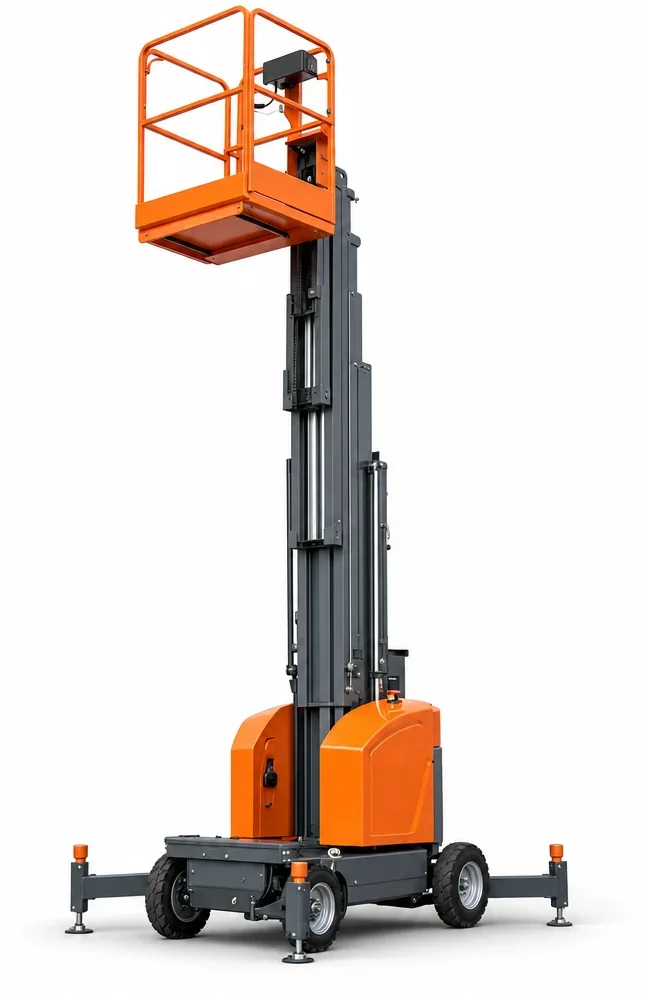
Where a mast lift makes sense
- Straight-up work: Lighting, sensors, and duct drops directly overhead.
- Tight access: Narrow machines fit through standard doors and around stored materials in local distribution spaces.
- Low floor impact: Non-marking tires and light ground pressure suit finished slabs.
Local factors that influence selection
- Surface: These lifts are designed for slab floors. Exterior caliche or sandy soils typical around Midland yards point to other categories such as /rough-terrain-scissor-lift-rental/.
- Overhead obstructions: If the target sits behind beams or utilities, an articulating platform at /articulating-boom-lift-rental/ may be required.
- Environment: Dust and temperature swings from nearby exterior doors can affect comfort and scheduling, but the machine still depends on smooth surfaces.
Sizing and features
- Platform height: Pick for the routine task height rather than the rare maximum.
- Footprint: Verify turning radius and machine width against corridors and mezzanine corners.
- Power: Electric drive suits indoor use with minimal ventilation needs.
Related options
For slab work needing more deck space, see /electric-scissor-lift-rental/. For exterior access on uneven ground, compare /telescopic-boom-lift-rental/ and /articulating-boom-lift-rental/ depending on reach path.
Typical Midland use cases
Interior maintenance in industrial sites, aviation support areas, and local public venues often involves repeated, short-duration tasks at moderate heights where maneuverability saves time.